
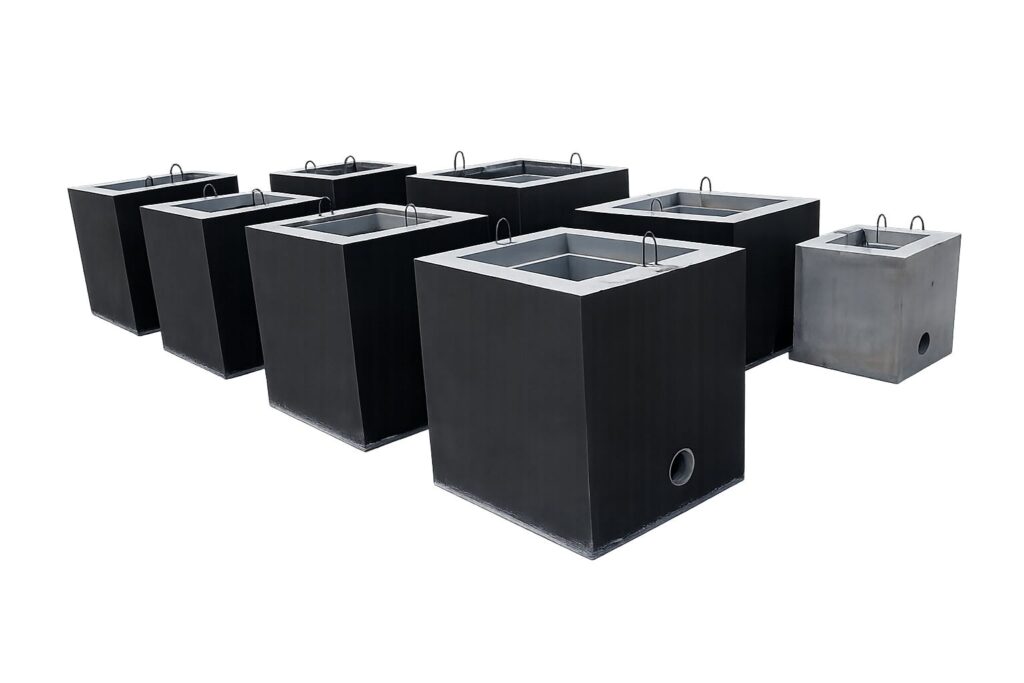


Product Description
Product Description
Precast Concrete Manhole
KKK Precast – Your Trusted Precast Concrete Manhole Manufacturer
Manholes play a vital role in underground utility infrastructure throughout the UAE. Precast concrete manholes are among the most essential components of drainage, sewerage, telecom, and utility networks. They provide superior structural strength, watertight performance, durability, and rapid installation, making them ideal for drainage networks, sewerage systems, telecom infrastructure, residential developments, commercial buildings, industrial facilities, and government infrastructure projects.
KKK Precast is a trusted manufacturer and supplier of high-quality precast concrete manholes in the UAE for a wide range of underground utility applications. Our manholes are manufactured according to approved project drawings, structural requirements, reinforcement specifications, concrete grades, installation procedures, consultant specifications, and authority standards.
Precast concrete manholes are much more than access chambers. They provide structural stability, watertight performance, easy maintenance access, and long-term durability while significantly reducing onsite shuttering, reinforcement fixing, concrete pouring, and curing.
WHY PRECAST CONCRETE MANHOLES MATTER
Precast concrete manholes provide numerous advantages for modern underground infrastructure projects.
Structural Strength
Precast manholes provide excellent structural performance and are designed to meet project requirements, traffic loading, and ground loading conditions.
Long-Term Durability
Properly manufactured manholes perform reliably under high groundwater conditions, soil pressure, coastal environments, industrial applications, and the demanding weather conditions of the UAE.
Faster Construction
Factory-manufactured manholes are delivered ready for installation, reducing onsite construction time and improving overall project efficiency.
Dimensional Accuracy
Controlled precast manufacturing ensures consistent dimensions for precise alignment with pipelines and improved coordination with other underground infrastructure components.
Reduced Site Work
Precast manhole systems significantly reduce onsite shuttering, reinforcement fixing, concrete pouring, and curing.
Watertight Performance
Precast manholes incorporate engineered jointing systems designed to minimise infiltration and exfiltration in drainage and sewerage applications.
Low Maintenance
Precast concrete manholes provide a long service life with minimal maintenance requirements compared to conventional cast-in-situ manholes.
UAE PROJECT CONDITIONS
Underground infrastructure projects throughout the UAE operate under challenging environmental conditions.
Precast concrete manholes may be exposed to:
- High groundwater tables
- Saline soil conditions
- Coastal environments
- Sandstorms
- Seasonal rainfall
- Industrial environments
- Heavy vehicle and traffic loading
- Construction activities
- Continuous underground exposure
Precast concrete manholes should not be selected based solely on appearance or price.
Important Project Considerations
- Manhole access requirements and dimensions
- Structural and traffic loading
- Pipe inlet and outlet locations
- Groundwater conditions
- Soil properties and ground conditions
- Jointing and sealing requirements
- Cover and frame specifications
- Installation method
- Consultant specifications
- Authority requirements
OUR PRECAST CONCRETE MANHOLE RANGE
KKK Precast manufactures a complete range of precast concrete manholes for various underground infrastructure applications.
Drainage Manholes
Suitable for:
- Stormwater networks
- Road drainage systems
- Residential developments
- Commercial developments
Sewerage Manholes
Designed for:
- Wastewater collection networks
- Residential compounds
- Commercial buildings
- Government infrastructure
Telecom & Utility Manholes
Manufactured with:
- Cable entry openings
- Duct arrangements
- JRC-compliant configurations
- Utility authority specifications
Inspection Chambers
Suitable for:
- Pipeline access points
- Maintenance access
- Residential networks
- Commercial networks
Deep Drainage Manholes
Designed for:
- Trunk sewer lines
- Road infrastructure
- Industrial developments
- High-depth applications
Custom Precast Manholes
Manufactured according to approved drawings with:
- Custom dimensions
- Project-specific reinforcement
- Pipe entry openings
- Embedded items
- Step irons
- Cover and frame combinations
- Lifting arrangements
TYPICAL TECHNICAL RANGE
|
Specification |
Value / Description |
|
Product Type |
Precast Concrete Manhole |
|
Manhole Dimensions |
Standard or customised according to approved drawings |
|
Concrete Grade |
As per approved project specification |
|
Reinforcement |
Project-specific reinforcement design |
|
Pipe Openings |
As per approved drawings |
|
Jointing System |
Project-specific |
|
Cover & Frame |
As specified by project requirements |
|
Embedded Items |
Step irons, sleeves, inserts, lifting anchors, and project-specific components |
|
Documentation |
Shop drawings and QA/QC package (where applicable) |
Final manhole dimensions, reinforcement, concrete grade, jointing system, cover and frame arrangement, and structural performance should always be verified against approved project drawings and technical specifications.
SELECTING THE RIGHT PRECAST MANHOLE SUPPLIER
Choosing the right precast manhole supplier is critical to the success of any infrastructure project.
Price should never be the only consideration.
A reliable supplier should provide:
Product Quality
Uniform concrete quality, reinforcement control, dimensional accuracy, and dependable structural performance.
Manufacturing Capability
The ability to manufacture standard, customised, and high-volume precast manholes within project schedules.
Engineering Support
Coordination with approved drawings, technical specifications, pipe layouts, and installation methods.
Quality Control
Inspection procedures to verify dimensional accuracy, reinforcement placement, concrete quality, and production consistency.
Delivery Planning
Efficient transport planning, lifting coordination, unloading, and phased project deliveries.
Documentation
Preparation of:
- Shop drawings
- QA/QC documentation
- Concrete test reports
- Dimensional inspection records
- Project documentation (where applicable)
MANUFACTURING PROCESS
KKK Precast follows a controlled precast production process that ensures repeatability, quality, and efficient project coordination.
Typical Production Stages
- Review of project drawings and specifications
- Confirmation of manhole dimensions and quantities
- Structural and reinforcement verification
- Preparation of shop drawings where required
- Mould preparation
- Reinforcement fabrication
- Reinforcement placement
- Installation of pipe openings and embedded items
- Pre-pour inspection
- Concrete casting
- Controlled curing
- Demoulding
- Dimensional inspection
- Visual quality inspection
- Concrete testing and documentation
- Storage planning
- Delivery coordination
Controlled factory production provides significantly greater consistency and quality than conventional onsite construction.
QUALITY ASSURANCE & COMPLIANCE
Quality assurance is an integral part of our manufacturing process.
Concrete Testing
Concrete test records and cube test results prepared according to approved Quality Plans.
Dimensional Inspection
Inspection of manhole dimensions, wall thickness, reinforcement cover, pipe openings, and embedded items.
Reinforcement Inspection
Inspection of reinforcement before concrete casting.
Embedded Item Inspection
Verification of inserts, step irons, sleeves, lifting anchors, and connection components.
Visual Inspection
Inspection for:
- Honeycombing
- Surface quality
- Workmanship
- Dimensional accuracy
- Visible defects
Production Traceability
Production records maintained to satisfy project QA/QC requirements.
Shop Drawing Control
Manufacturing carried out according to approved project drawings where applicable.
Final inspection, testing, and documentation requirements depend on consultant requirements, authority standards, approved submittals, and project specifications.
COMMON APPLICATIONS IN THE UAE
Precast concrete manholes are suitable for a wide range of underground infrastructure projects.
Residential Projects
- Villas
- Residential compounds
- Gated communities
- Housing developments
Commercial Developments
- Shopping centres
- Office buildings
- Hotels
- Mixed-use developments
Industrial Facilities
- Factories
- Warehouses
- Manufacturing plants
- Service yards
Infrastructure Projects
- Road projects
- Drainage networks
- Sewerage networks
- Telecom infrastructure
- Government infrastructure
- Public facilities
INSTALLATION & PROJECT HANDLING
Proper planning and coordination are essential for successful installation.
Site Assessment
Review of:
- Site access
- Excavation and soil conditions
- Crane access
- Installation sequence
- Storage areas
Delivery Planning
Coordination based on:
- Required quantities
- Manhole dimensions
- Unit weights
- Transport requirements
- Delivery schedules
Manhole Installation
Installation carried out according to approved project drawings and engineering specifications.
Final Inspection
Verification of:
- Alignment
- Pipe connections
- Jointing and sealing
- Cover and frame levels
- Visible defects
- Project-specific requirements
DELIVERY ACROSS THE UAE
KKK Precast supplies precast concrete manholes throughout:
- Dubai
- Abu Dhabi
- Sharjah
- Ajman
- Ras Al Khaimah
- Fujairah
- Umm Al Quwain
Delivery planning is coordinated according to:
- Project location
- Required quantities
- Manhole dimensions
- Unit weights
- Site access
- Crane availability
- Hiab requirements
- Delivery sequence
- Installation priorities
Large developments can be supplied in phases according to construction schedules.
WHY CHOOSE KKK PRECAST?
Project-Based Manufacturing
Precast concrete manholes are manufactured according to approved drawings, dimensions, structural loading, and technical specifications.
Custom Manufacturing Capability
Standard and customised manhole systems are manufactured to suit project requirements.
Controlled Precast Production
Factory production ensures dimensional consistency, quality control, and complete product traceability.
Engineering Coordination
Reinforcement, pipe openings, embedded items, and lifting arrangements are coordinated according to approved drawings.
Large Production Capacity
Production planning supports both small projects and large phased developments.
UAE-Wide Supply
Delivery coordination is available across all seven emirates.
QA/QC Documentation
Production records, inspection reports, testing reports, and project documentation are prepared according to project requirements.
Complete Precast Solutions
Precast concrete manholes can be supplied together with:
- Transformer foundations
- Utility chambers
- Cable troughs
- Concrete barriers
- Septic tanks
- Precast bunkers
- Concrete shelters
- Other project-specific precast components
REQUEST A QUOTATION
To receive an accurate quotation, please provide:
- Project drawings
- BOQ
- Manhole type and application
- Manhole dimensions and depth
- Required quantities
- Concrete grade
- Reinforcement requirements
- Pipe inlet and outlet requirements
- Cover and frame requirements
- Embedded item requirements
- Lifting requirements
- Delivery location
- Required delivery dates
- Site access information
- Unloading requirements
- Crane / Hiab requirements
- Installation sequence
- Consultant specifications
- Authority requirements
- Other project-specific technical requirements
Please submit these details through our Contact Us page. Our technical team will review your project requirements and provide a detailed quotation.
Final manhole dimensions, concrete grade, reinforcement arrangement, pipe openings, embedded items, jointing system, cover and frame arrangement, lifting details, structural performance, and installation requirements remain subject to approved drawings, engineering design, consultant requirements, authority requirements, and project specifications.